 |
|

 |
Read Scientific Publications : |
 |
|
EvergladesHUB >Issues>Legal |
Environmental LAWS | Judiciary is called upon to decide the (many) cases of disputes concerning Florida Everglades. Both State and Federal case issues are involved - only major and currently outstanding ones are mentioned here. |
|
1991 Consent Decree sets out steps Florida should take to preserve water quality in the Everglades. The Technical Oversight Cmt. (SFWMD) is to oversee the compliance. Both federal Gold and Moreno cases are somewhat intertwined.  Case #88-1886-civ-Moreno
Originally, Judge Hoeveler
Reservoir-A1 construction allowed stopped (March 23, 2011)
Case #88-1886-civ-Moreno
Originally, Judge Hoeveler
Reservoir-A1 construction allowed stopped (March 23, 2011) |
Judge Moreno appointed the Special Master (John M. Barkett) to determine if the water quality standards in the ENP and the Loxahatchee NWR were met. There were 3 recent hearings:
Aug. 31, 2010: Construction of A1 reservoir (Talisman)
Oct. 25, 2010: Loxahatchee (NWR) exceeded P-limits
Feb. 14-17, 2011: Continued - Loxahatchee P-exceed. remedies |
July 2008 - the EPA was found violating its duties under the Clean Water Act. April 2010 - EPA ordered to craft an enforceable plan with Florida to cut P levels - water quality milestones to be met and enforced:
Case #1:04-cv-21448-ASG :
Miccosukee Tribe of Indians and Friends of the Everglades vs. USA et al.
Dec17/10: SFWMD appealed. |
Aug.19, 2009 EPA Consent Decree bound it to propose federal criteria for FL in January 2010, adopting such rules by October 2010. Judge R.L. Hinkle, US Distr. Court:
Case #4:08cv00324-RH-WCS: FWF (+4 envir. groups) vs EPA.
Criteria for coastal waters and estuaries should follow and be finalized by Aug.15, 2012.
Judge Hinkle is currently consolidating appeal cases.
|
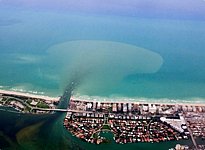
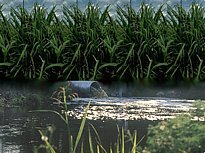
On December 11, 2006, Federal District Judge C.M. Altonaga in Miami ruled that the SFWMD must comply with the Clean Water Act. June 14, 2007 fed. court injunction required the SFWMD to apply for pollution discharge permits for pumping into Lake Okeechobee.
Case #9:02-cv-80309-CMAFriends of the Everglades vs. SFWMD
"Back-pumping must stop" |
|
|
|
|
|


Milestone Cases |
Milestone decisions establishing whole trends in Everglades development are most often made by courts - at Federal and State levels |
|||||

COMMENTARY:
Curtis Morgan Miami Herald |
Allow the POP-UP feature on your browser. Some links have mouse-over pop-up pictures - example :
see Judge Moreno below : Judge F.A. MORENO (earlier - Judge Hoeveler) Consent Decree The US District Court, Southern District of Florida. Case #88-1886-civ-Moreno: USA vs. South Florida Water Management District. Special Master (John M. Barkett) appointed holding hearings on Loxahatchee P exceedence and advising the Judge.  |
The 1991 Settlement Agreement, entered as Consent Decree by Judge Hoeveler in 1992, 847 F. Supp 1567 (S.D. Fla 1992) sets out in detail the steps the State of Florida would take over the next ten years to restore and preserve water quality in the Everglades. Judge Moreno appointed the Special Master (John M. Barkett) to determine if the water quality standards in the Everglades National Park and the Loxahatchee National Wildlife Refuge were met. During the last 9 months, there were 3 hearings: |
||||
| Clean Water Act |  |
|||||
COMMENTARY:
Kurt AndersonMiami Herald |
Judge Alan S. GOLD Case #1:04-cv-21448-ASG Miccosukee Tribe of Indians and Friends of the Everglades vs. USA et al. (Lead case #04-21448-civ-Gold consolidated with #04-cv-22072, and #05-cv-20663). The US District Court, Southern District of Florida.  |
In July 2008 Judge Gold had entered an Order finding that EPA violated its duties under the Clean Water Act. In the April 2010 Order, Judge Gold ordered EPA to craft an enforceable plan with Florida to cut phosphorus levels and if the Florida State does not do so, ordered EPA to draft such a plan itself. Judge Gold required EPA and FDEP to develop and meet specific water quality milestones with an enforceable framework: (1) - by 9/3/10 EPA must draft an Amended Determination directing the State to correct the deficiencies of the Amended Everglades Forever Act. (2) - by 11/3/10 EPA shall conform all NPDES permits for Stormwater Treatment Areas (STAs). (3) - by 7/1/ 2011 EPA must promulgate amended standards for the State if Florida has not done so by January 2011. In September 2010, EPA filed an amended determination setting the WQBEL (Water Quality Effluent Based Limit) for the discharges of the Stormwater Treatment Areas (STAs). The 2-pronged approach to the WQBEL derivation that uses the Long Term Geometric Mean as well as the Flow-Weighted Mean is to ensure that the long-term 10 ppbP limit value of the phosphorus criterion will be met. Currently, the SFWMD filed an appeal to the 11th Circuit arguing that the Judge overstepped his jurisdictional reach. This step may result in taking the edge off the EPA criteria introduction by delaying and suppressing the issue. FURTHER DEVELOPMENT: April 26, 2011: US District Judge Alan Gold's decision expressed urgency for the conservation of the Everglades, and attempts to end 23 years of litigation over water quality in Florida. July 1, 2011 deadline is set for the parties to submit a description of progress made. July 10, 2012: US District Judge Alan S. Gold has scheduled a July 18 hearing in Miami on a framework agreement for restoration proposed by gov. Scott in 2011. The $880 million, 12-year agreement was approved by the US EPA on June 13. Setting a national precedence ? "Nutrient standads under the Clean Water Act" Blog by Alex Basilevski - attorney with the Environmental Department of Obermayer Rebmann Maxwell & Hippel in Philadelphia, PA. |
||||
| EPA Water Quality | As of Jan.8, 2014, the state of Florida allowed to set its water quality standards
|
|||||
(some) EXPLANATION: "Agriculture Wading into Troubled Waters in Florida" COMMENTARY: Meline MacCurdy Marten Law |
Federal judge rules on Fla water pollution limits
(Feb.19'12) :
EPA Numeric Nutrient Criteria:Case #4:08cv00324-RH-WCS: Florida Wildlife Federation (+4 envir. groups) vs EPA, Judge Hinkle
 |
In 2008, the Earthjustice (representing environmental groups) challenged the EPA on not enforcing the CWA in FL. Indeed, until now, FL has only narrative nutrient criteria which allow degradation of many water bodies (fresh and coastal). |
||||
| LO Contamination | As of June 14, 2007, backpumping contaminated water into LO is forbidden
|
|||||
|
Back-Pumping into |
On December 11, 2006, a federal district judge in Miami ruled that the SFWMD must comply with the Clean Water Act. |
||||
| RECENT | Impaired Waters | Impaired Waters & Clean Water Act | As of Jan.8, 2014, the state of Florida allowed to set its water quality standards
|
|||
|
FL CLEAN WATER NETWORK versus
US-EPA
US District Court for the Northern District of Florida - Tallahassee Division (March 30, 2012) Judge M.C. Rodgers |
The plaintiffs, Florida Clean Water Network, Inc.; Conservancy of Southwest Florida; St. Johns Riverkeeper; and Linda L. Young,
filed this lawsuit against the defendants, US Environmental Protection Agency; Lisa P. Jackson, in her official capacity as Administrator of the US-EPA; US-EPA Region 4 - Case No. 4:09cv165/MCR/WCS : As FDEP released a new list of Impaired Waters and waters that have been Delisted, the state continues to use every way possible to take polluted waters off of the impaired waters list – 303(d) and to avoid setting pollution limits.This is the fourth winner lawsuit over Florida’s Impaired Waters Rule (IWR) in the past 10 years and still the Florida DEP continues to help polluters find ways around the Clean Water Act. Now, the US-EPA has to review these FL actions within the next 120 days. |
||||
| RECENT | Mining | Rock Mining & Everglades | |
|||
|
1000 FRIENDS OF EVERGLADES
versus
PALM BEACH COUNTY
District Court of Appeal of Florida, Fourth District, No. 4D10-60
SIERRA CLUB, INC. versus
U.S. ARMY CORPS OF ENGINEERS
April 8, 2011 - US Court of Appeals Eleventh Circuit #10-13613. Before MARTIN, FAY and BLACK, Circuit Judges. |
Defendant, The Palm Beach County Commission issued a development order to Bergeron Sand and Rock Mine Aggregates, Inc., granting the corporation the right to mine within the "Everglades Agricultural Area" in western Palm Beach County. Bergeron sought to expand its mining operations on property designated as "agricultural production" in the comprehensive plan. After the order issued, appellants filed a complaint for declaratory and injunctive relief to challenge the development order, claiming that the order was inconsistent with a Future Land Use Element ("FLUE") policy of the comprehensive plan. The specific FLUE policy, 2.3-e.3, states that "mining and excavation activities, as applicable, shall be restricted" (as specified). The appeal was granted - NO mining ! Defendant-Appellant Mosaic Fertilizer, LLC (Mosaic), a phosphate mining company engaged in significant operations in Hardee County, FL, appeals the order by the district court remanding a mining-permit issued by the United States Army Corps of Engineers (Corps) back to the agency and further enjoining Mosaic from conducting operations approved in that permit. "Due to the unique circumstances presented by this case, we direct the District Court to stay the issuance of the permit for 90 days from the date of this order to permit the district court to proceed to a merits determination on the full record." (3) VACATED AND REMANDED. |
||||

 |
See some selected, important and environmentally related LAWS << (click there for a separate web-page) | |
| LEGISLATIVE ACTIVITIES - environment related - etc. | ||
(2015) HB 7003 - Water Resources |
Along with the 1/3 phosphorus reduction, little of the 600,000 tons of nitrogen coming into the lake (and released to estuaries) is going to be reduced under the state's plan. Deadlines for meeting nutrient targets are also proposed | The requirements to meet water quality standards may leave the South Florida Water Management District vulnerable to litigation. Supporters of the bill believe that the recently adopted Basin Management Action Plan's (BMAP) projection of reducing 1/3 of the phosphorous entering Lake Okeechobee is enough. |
| Everglades improvement and management: HB-7065 (2013) |
Revises provisions for use of certain ad valorem tax proceeds; provides that certain discharges do not constitute violations of water quality standards; | Directs SFWMD to complete specified analysis; extends period time for collection of agricultural privilege tax; provides that payment of such tax & certain costs fulfills certain constitutional obligation |
|
|
|
 |
 |
©
2009-2014, Boya Volesky E-mail: evergladeshub@gmail.com |
|
 |